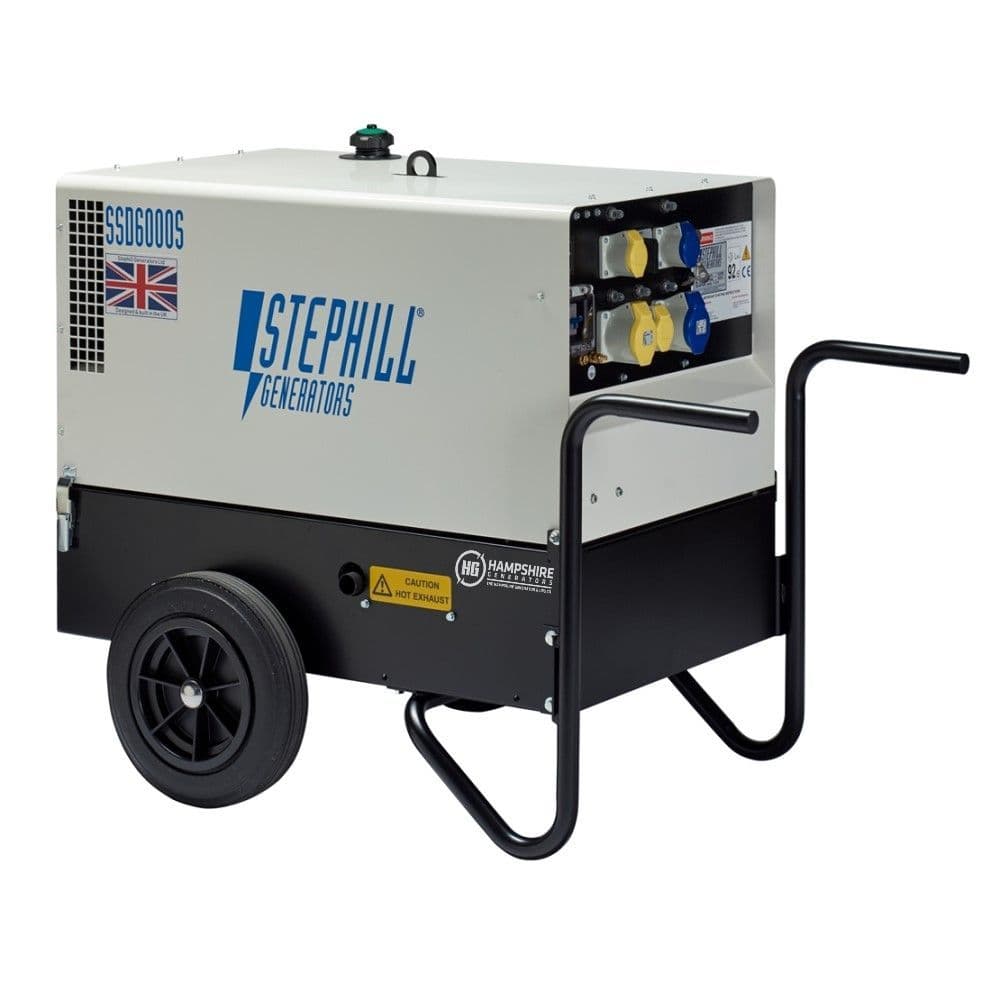
Noise is frequently the constraint that decides which generator you can buy, rather than an optional upgrade. It is also the specification most often compared incorrectly, because the headline figure means nothing without the distance it was measured at.
Reading the figure properly
Generator noise is quoted in decibels at a stated distance — commonly dB(A) at 7 metres, sometimes at 1 metre or 10 metres. The distance is not a footnote; it changes the number substantially.
Sound pressure falls by roughly 6 dB for each doubling of distance. A set quoted at 65 dB(A) at 7 m and one quoted at 65 dB(A) at 10 m are not equivalent — the second is noticeably louder at the same point.
Decibels are logarithmic, so a 10 dB reduction is perceived as roughly half as loud. The difference between a 75 dB open set and a 65 dB canopied one is larger than the numbers suggest.
Open frame, acoustic and super-silent
An open-frame set is cheapest, lightest and easiest to service, and loud. It suits isolated sites, agriculture and applications where nobody is nearby.
An acoustic canopy encloses the set in insulated panels with baffled airflow, typically cutting 10–15 dB(A). This is the standard specification for construction, events and most standby work.
Super-silent enclosures go further with heavier insulation and more elaborate air paths. They cost more, weigh more and complicate access, and they are the default for film and broadcast location work, hospitals, and anywhere near housing.
Engine speed matters as much as the box
A 1500 rpm set is markedly quieter than a 3000 rpm set of the same output, before any enclosure is fitted. It also lasts considerably longer.
Cheap portable sets are usually 3000 rpm because the engine can be smaller for a given output. For anything beyond occasional emergency use, the slow-revving option is the better buy, and the noise difference alone often justifies it.
Limits, planning and neighbours
Fixed standby plant is subject to local authority noise control, and conditions are commonly attached at planning stage — often specifying a limit at the nearest residential boundary rather than at the machine.
Standby sets also need testing, typically monthly, and that test run is what generates complaints. Siting, enclosure and exhaust routing all need considering together.
If the installation is anywhere near housing, establish the limit you must meet before shortlisting, and buy to it. Retrofitting acoustic treatment is always more expensive than specifying it.
Common questions
- How much quieter is an acoustic canopy?
- Typically 10-15 dB(A) against an open-frame set, which is perceived as roughly half as loud or better. Super-silent enclosures go further again.
- Why does the quoted distance matter?
- Sound pressure falls around 6 dB for each doubling of distance, so a figure at 1 m and the same figure at 7 m describe very different machines. Always compare at the same distance.
Examples from our generators range
A sample of what we list — the full range is larger, and we will confirm the specification with you before you order.
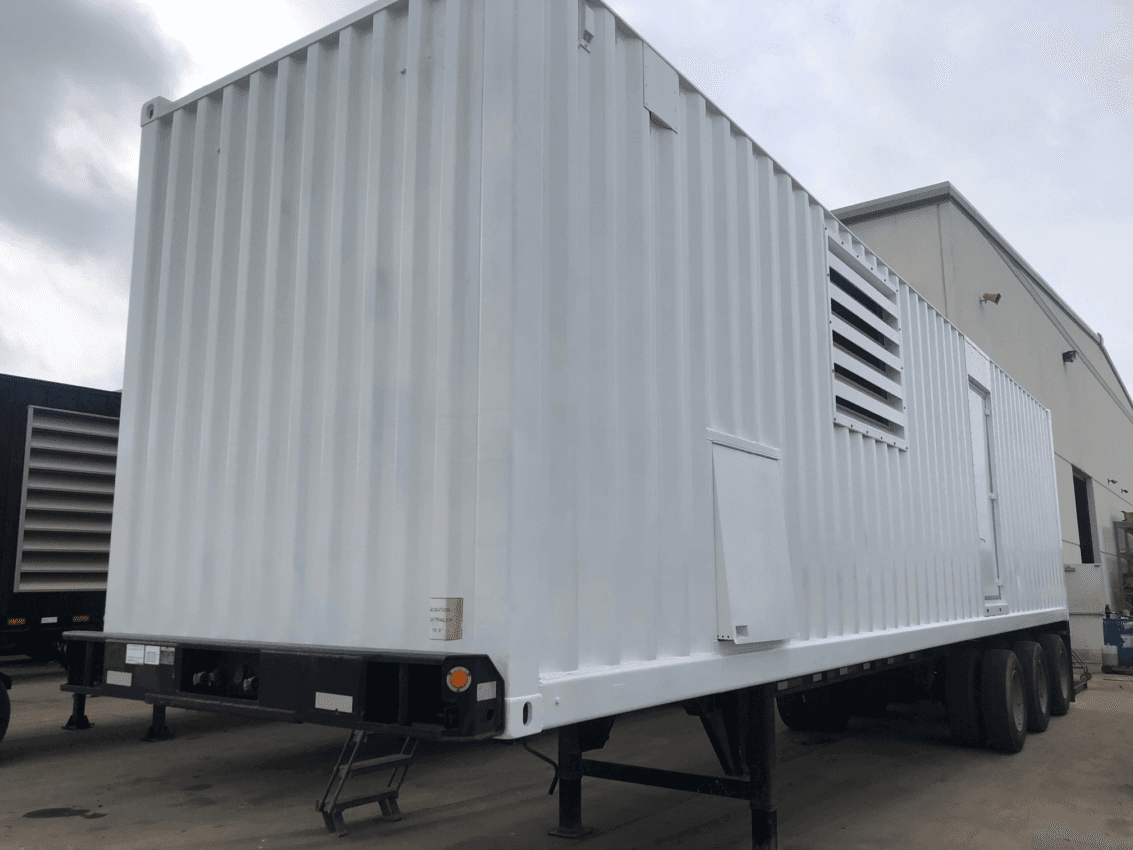
Portable Power Generators
Caterpillar XQ1750 Portable Power Module – 3516 DITA - 1750 kW
£150,000.00ex VAT
Request a quote for volume pricing
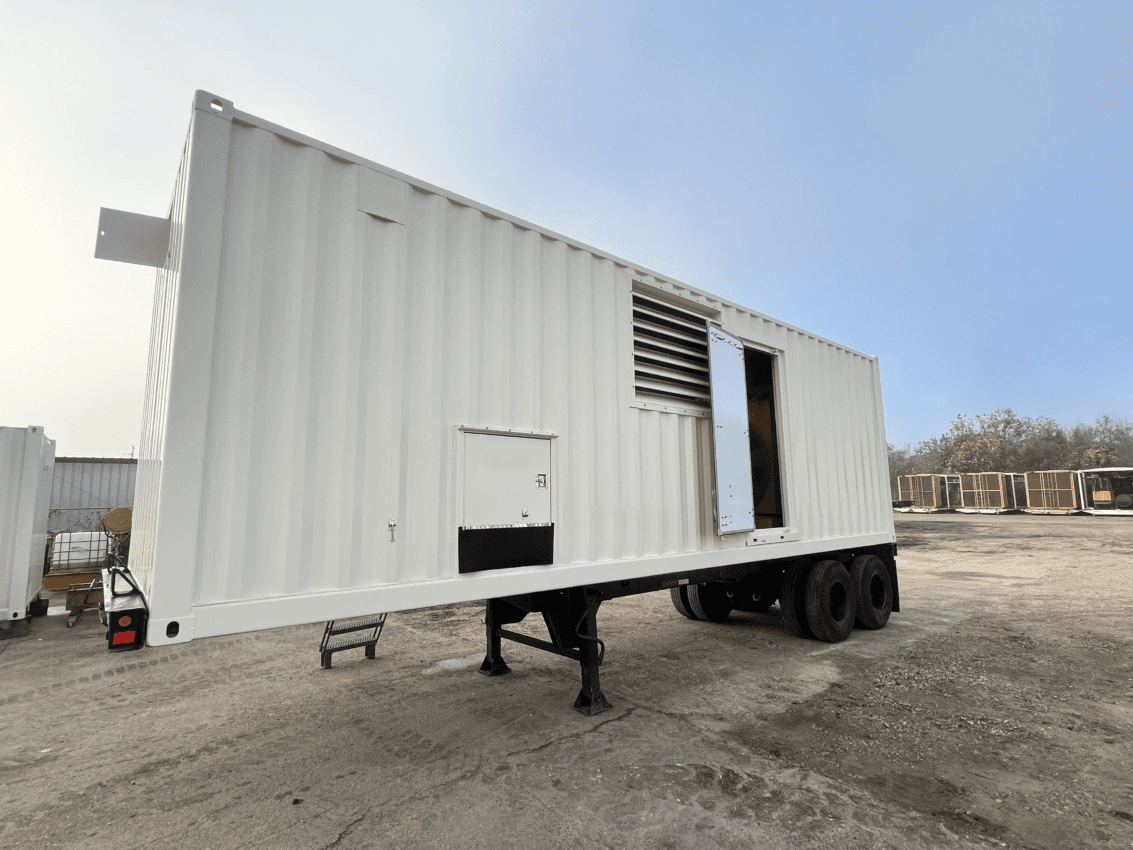
Portable Power Generators
Caterpillar XQ550G Natural Gas Power Module – G3512 TA - 555 kW
£150,000.00ex VAT
Request a quote for volume pricing
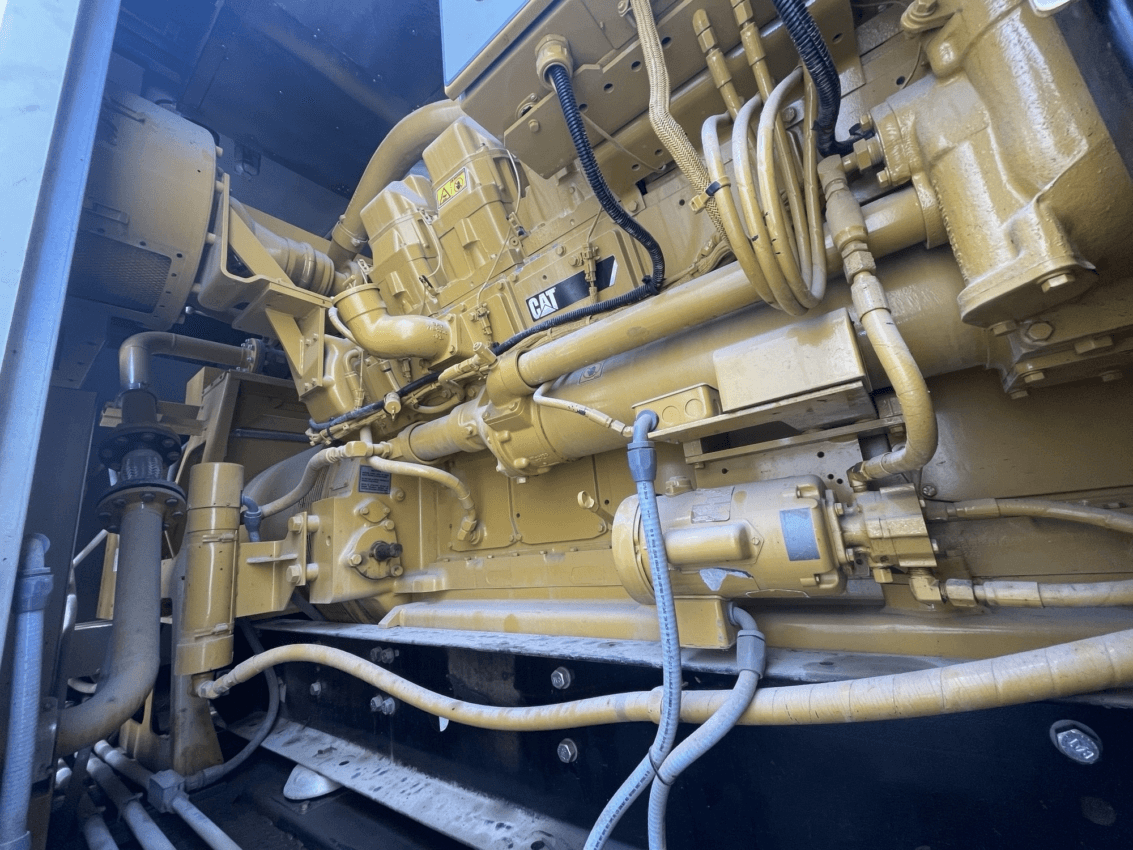
Portable Power Generators
Caterpillar XQ550G Natural Gas Power Module – G3512 TA - 555 kW
£135,000.00ex VAT
Request a quote for volume pricing
Further reading
External guidance from the Health and Safety Executive and GOV.UK. We summarise it here for convenience; where it matters, work from the source.