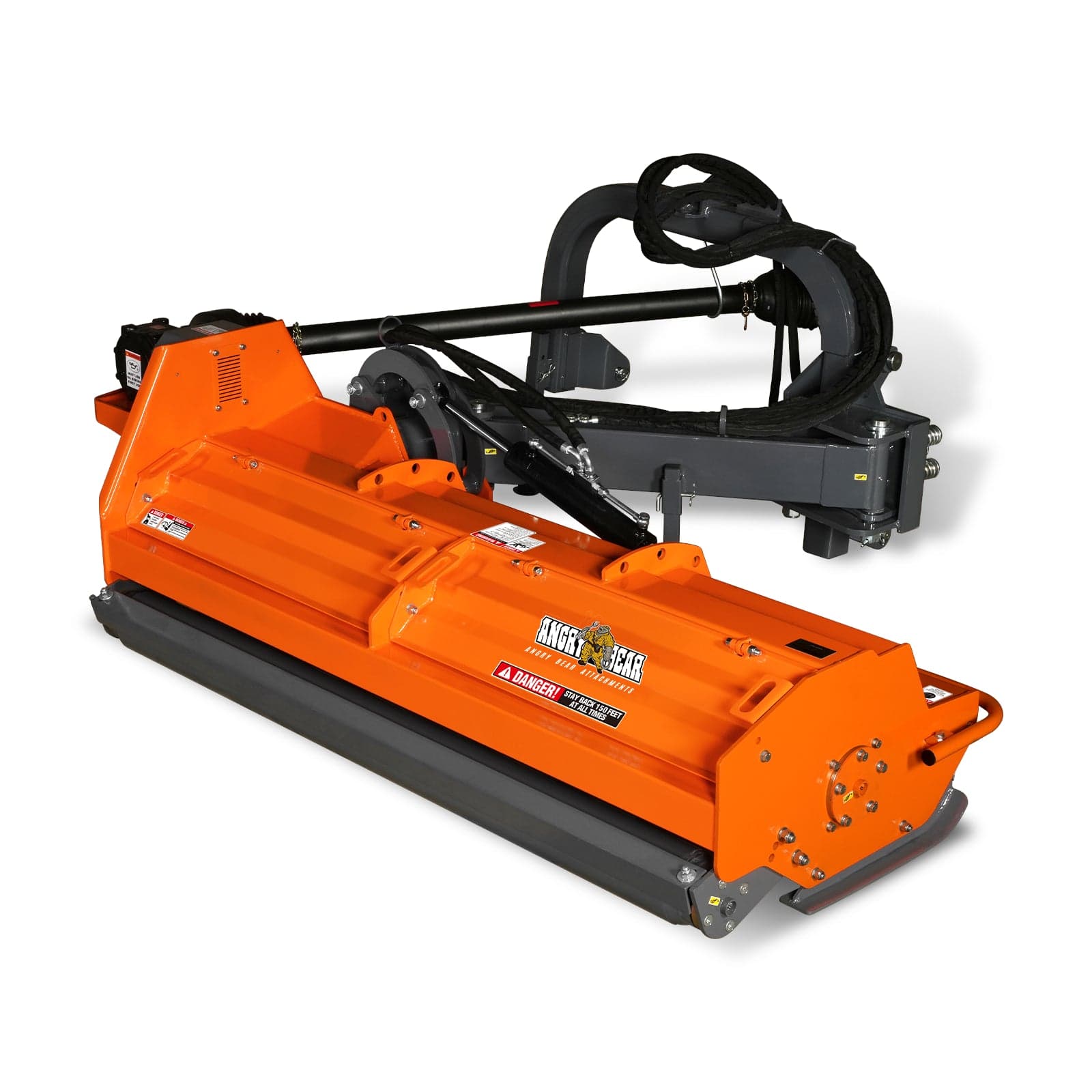
An implement that does not match your tractor is not a bargain at any price. Four things determine whether it will work: linkage category, PTO speed and power, hydraulic capacity, and weight. Checking them takes minutes and avoids the most common and most frustrating mistake in this category.
Three-point linkage categories
Three-point linkage is standardised into categories by pin diameter and spacing. Category 1 suits compact and small utility tractors, broadly 20–45 hp. Category 2 covers roughly 40–100 hp, Category 3 above that.
An implement built for Category 2 will not fit a Category 1 tractor without bushings or an adapter, and adapting upward is not always safe — the implement may simply be too heavy for the smaller machine regardless of whether the pins line up.
Check your tractor's category before shortlisting. Many implements are offered in more than one.
PTO speed and horsepower
The power take-off runs at a standard speed — commonly 540 rpm, with 1000 rpm on larger machines. The implement is built for one or the other, and running it on the wrong speed is either ineffective or destructive.
Each implement also specifies a horsepower range. The minimum is what it needs to work properly; the maximum protects the implement's driveline from a tractor that can overpower it.
Being under the minimum is the more common error. A flail mower on an underpowered tractor bogs down in exactly the heavy growth you bought it for.
Hydraulic capacity
Implements with hydraulic functions — offset mowers, hydraulic tippers, log splitters — need both adequate flow and a spare spool valve on the tractor.
Count your available spool valves before buying. Adding a valve block afterwards is routine work but it is an expense, and on some tractors it is awkward.
For continuously driven hydraulic implements, check oil cooling capacity as well as flow. Tractor hydraulics designed for intermittent use can overheat when driving something continuously.
Weight, lift capacity and stability
Rear linkage lift capacity is quoted at the ball ends and falls as the load extends rearward. A heavy implement mounted well behind the axle has far more leverage than its bare weight suggests.
Rear-mounted weight also unloads the front axle, which degrades steering and, on slopes, becomes a safety matter. Front ballast is frequently necessary with heavy rear implements, and it is cheaper than the alternative.
Check lift capacity, implement weight and your tractor's ballasting options together rather than in isolation.
Common questions
- What linkage category does my tractor have?
- Category 1 is typical for compact and small utility tractors around 20-45 hp; Category 2 covers roughly 40-100 hp. Measure the lower link pin diameter and spacing, or check the handbook.
- What happens if my tractor is below the implement's minimum horsepower?
- It works until the load rises, then bogs down — usually in exactly the heavy going you bought the implement for. Being under the minimum is a more common and more frustrating error than being over the maximum.
Examples from our tractor machinery & attachments range
A sample of what we list — the full range is larger, and we will confirm the specification with you before you order.
PTO Finishing Mowers
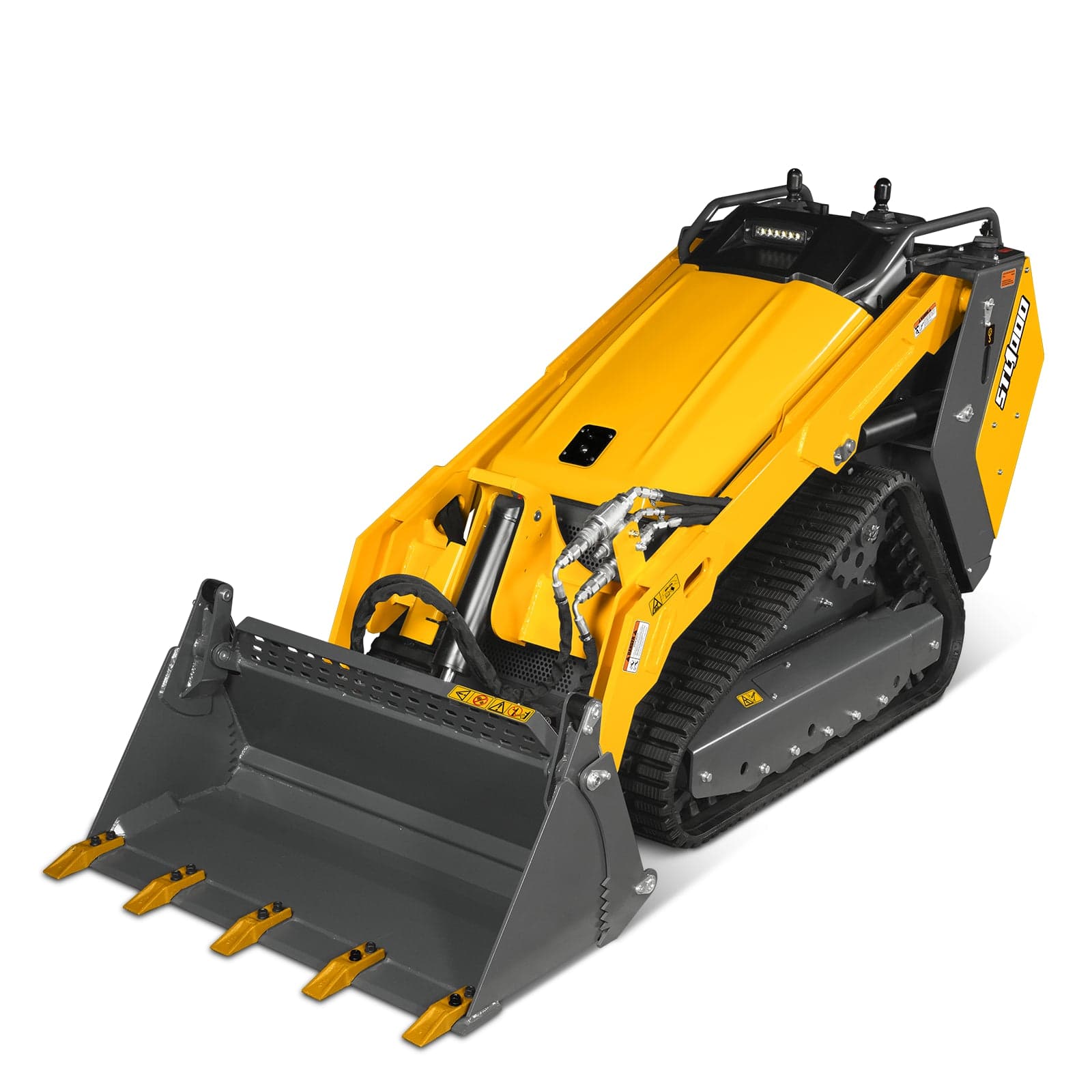
Mini Skid Steer Stand On Compact Track Loader ( 4 in 1 bucket included ) with 25HP KUBOTA D1105 Diesel Engine, Common Industry Interface (CII),...
£17,141.25ex VAT
Request a quote for volume pricing
Hay Equipment Combo
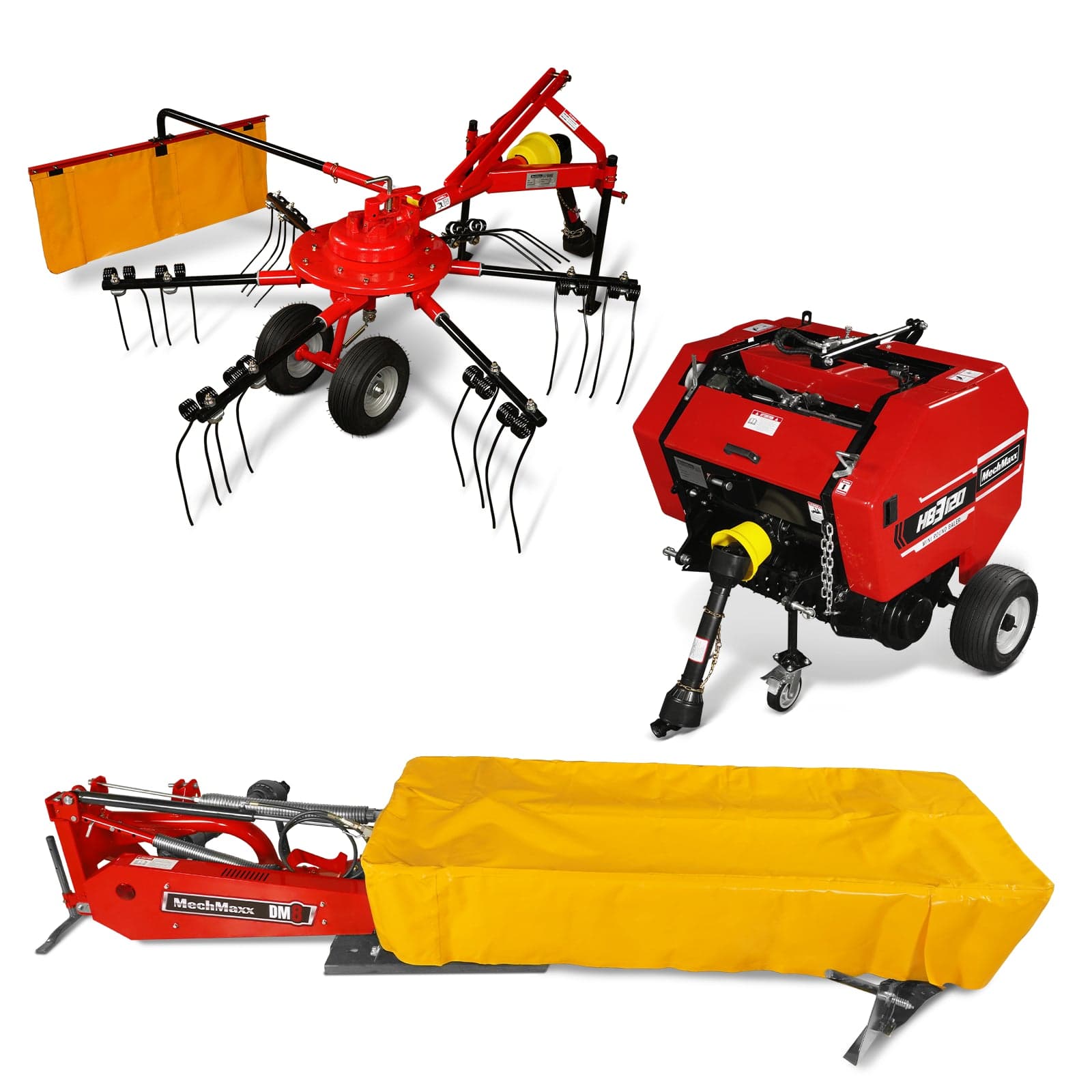
Hay Baler & Hay Rake Tedder & Disc Mower Combo, HB3120, HT100, DM8
£8,048.54ex VAT
Request a quote for volume pricing
Hay Equipment Combo
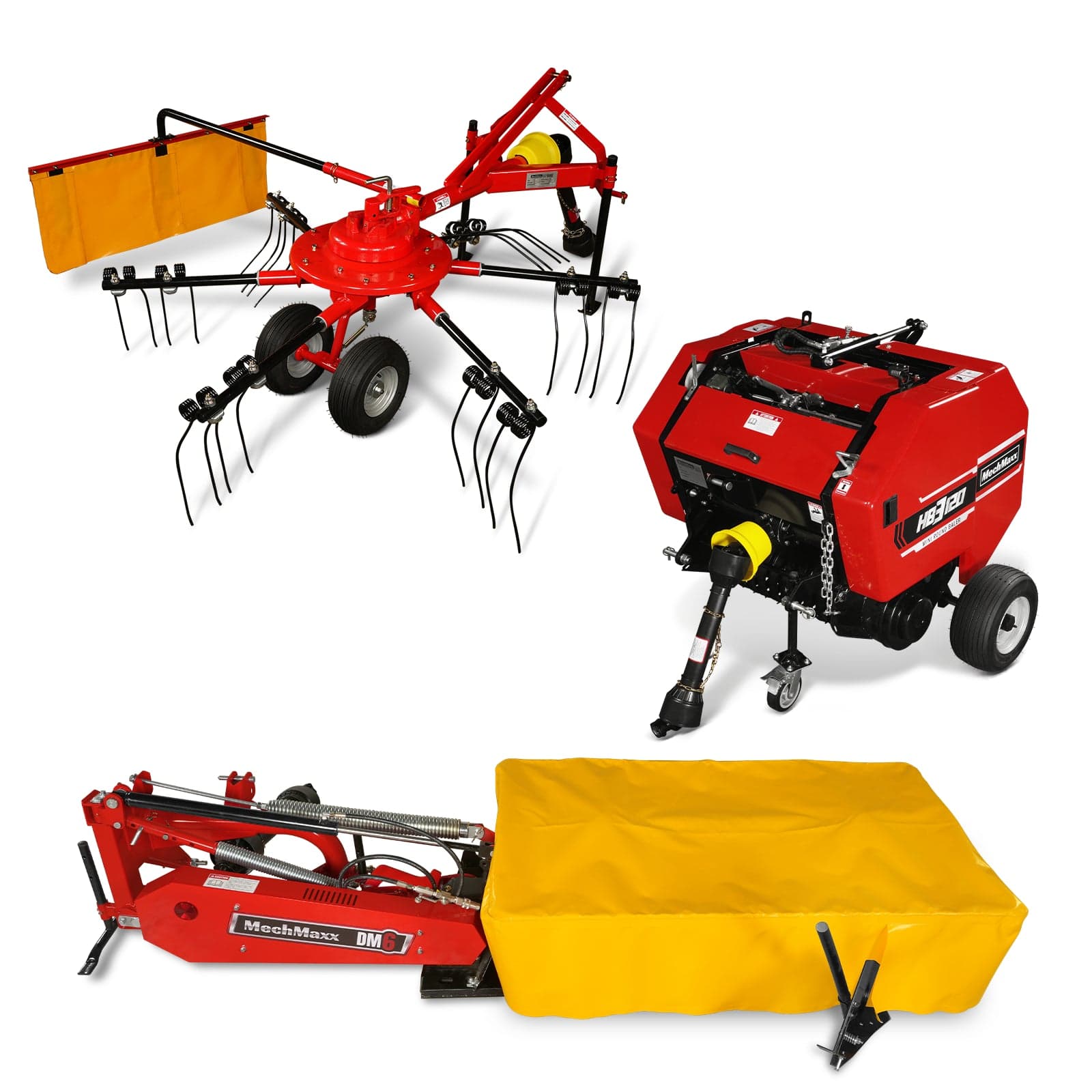
Hay Baler & Hay Rake Tedder & Disc Mower Combo, HB3120, HT100, DM6
£7,525.54ex VAT
Request a quote for volume pricing
Further reading
External guidance from the Health and Safety Executive and GOV.UK. We summarise it here for convenience; where it matters, work from the source.