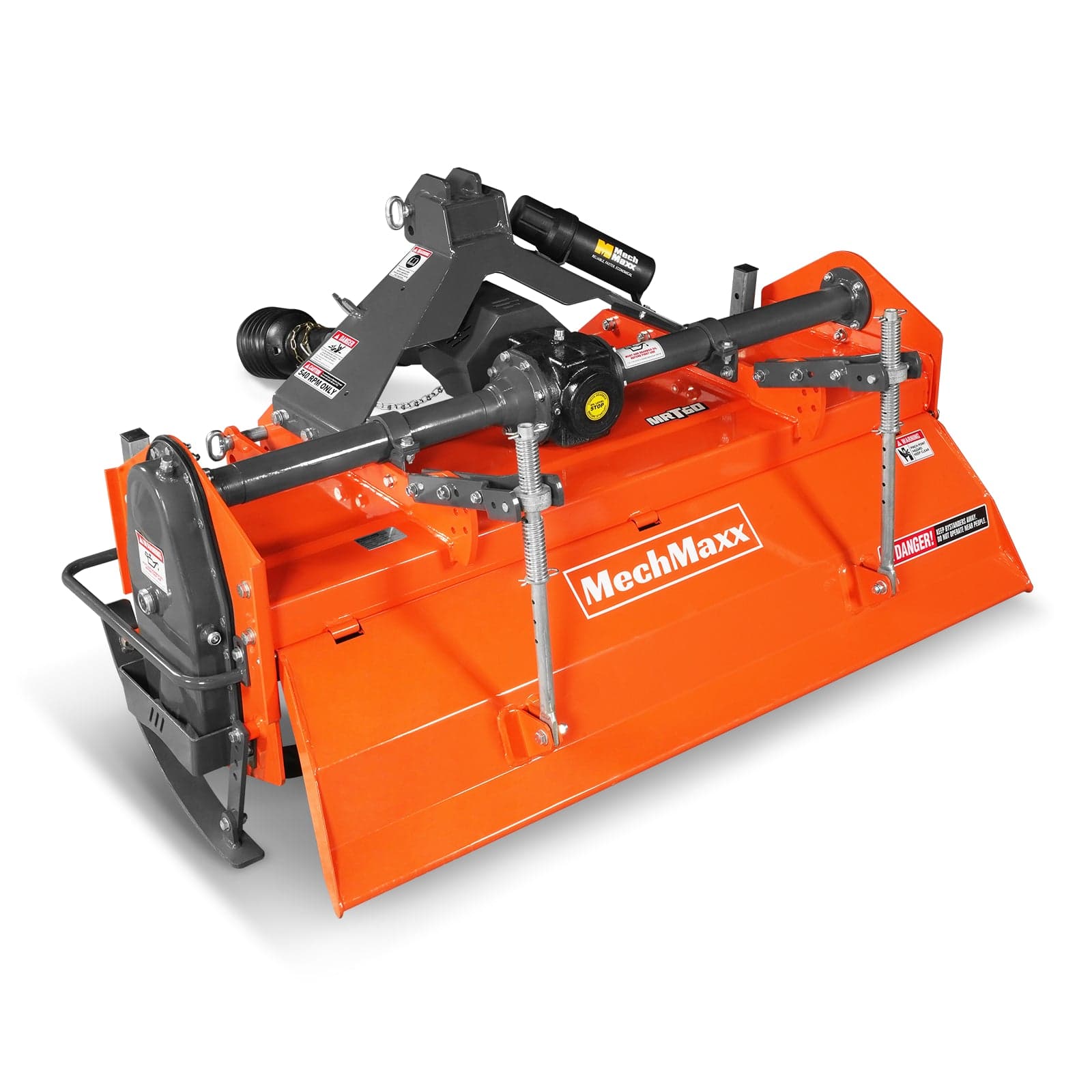
The power take-off is how a tractor drives an implement, and it is also the most dangerous part of most agricultural installations. Getting speed, shaft length and guarding right matters for performance and for safety in roughly equal measure.
540 and 1000 rpm
PTO output is standardised at 540 rpm or 1000 rpm, and implements are built for one. Running a 540 implement at 1000 rpm over-speeds it, with consequences ranging from poor results to component failure. Running a 1000 implement at 540 drives it too slowly to work.
Many tractors offer both, selectable, with a different shaft spline count for each — six splines for 540, twenty-one for 1000. The spline difference is a deliberate safeguard, but adapters exist and defeat it.
Some tractors also offer economy PTO, reaching 540 rpm at lower engine revs. That saves fuel and noise on light work and is worth using where the implement allows.
Shaft length and telescoping
A PTO shaft telescopes to accommodate the distance changing as the implement raises and lowers. Too long and it bottoms out, which can damage the tractor's PTO bearing or the implement's gearbox. Too short and it can pull apart in use.
Shafts are routinely cut to length for a specific tractor and implement combination. A second-hand implement may arrive with a shaft cut for a different tractor.
Check the overlap at both extremes of the lift range before first use: minimum overlap when fully extended, and clearance before bottoming when fully compressed.
Guarding
PTO shafts must be guarded along their length, with the guard restrained from rotating by its chains. Both the tractor-end master shield and the implement-end guard must be in place.
Entanglement in an unguarded shaft is among the most severe injuries in agriculture, and it happens at working speed in a fraction of a second. Missing guards on a used implement are both a hazard and a signal about how it has been maintained.
Under PUWER, UK employers have duties covering equipment suitability, maintenance and operator training — and guarding is the clearest expression of that.
Slip clutches and shear bolts
Most PTO implements include a driveline protection device: a shear bolt that breaks, or a friction clutch that slips, when the implement jams.
These protect an expensive gearbox with a cheap component. Replacing a sheared bolt with a higher-grade one, which happens, removes the protection entirely and transfers the next jam straight into the driveline.
Friction clutches need bedding in after storage — the plates can seize over winter and defeat the protection. Check the manufacturer's procedure before the first use of the season.
Common questions
- Can I run a 540 rpm implement at 1000 rpm?
- No. It over-speeds the implement, producing poor results at best and component failure at worst. The different spline counts exist to prevent it, and adapters that defeat that safeguard should be avoided.
- Does a PTO shaft need cutting to length?
- Usually, yes — shafts are cut for a specific tractor and implement pairing. A second-hand implement may have a shaft cut for a different tractor, so check overlap at both extremes of the lift range before use.
Examples from our tractor machinery & attachments range
A sample of what we list — the full range is larger, and we will confirm the specification with you before you order.
PTO Finishing Mowers
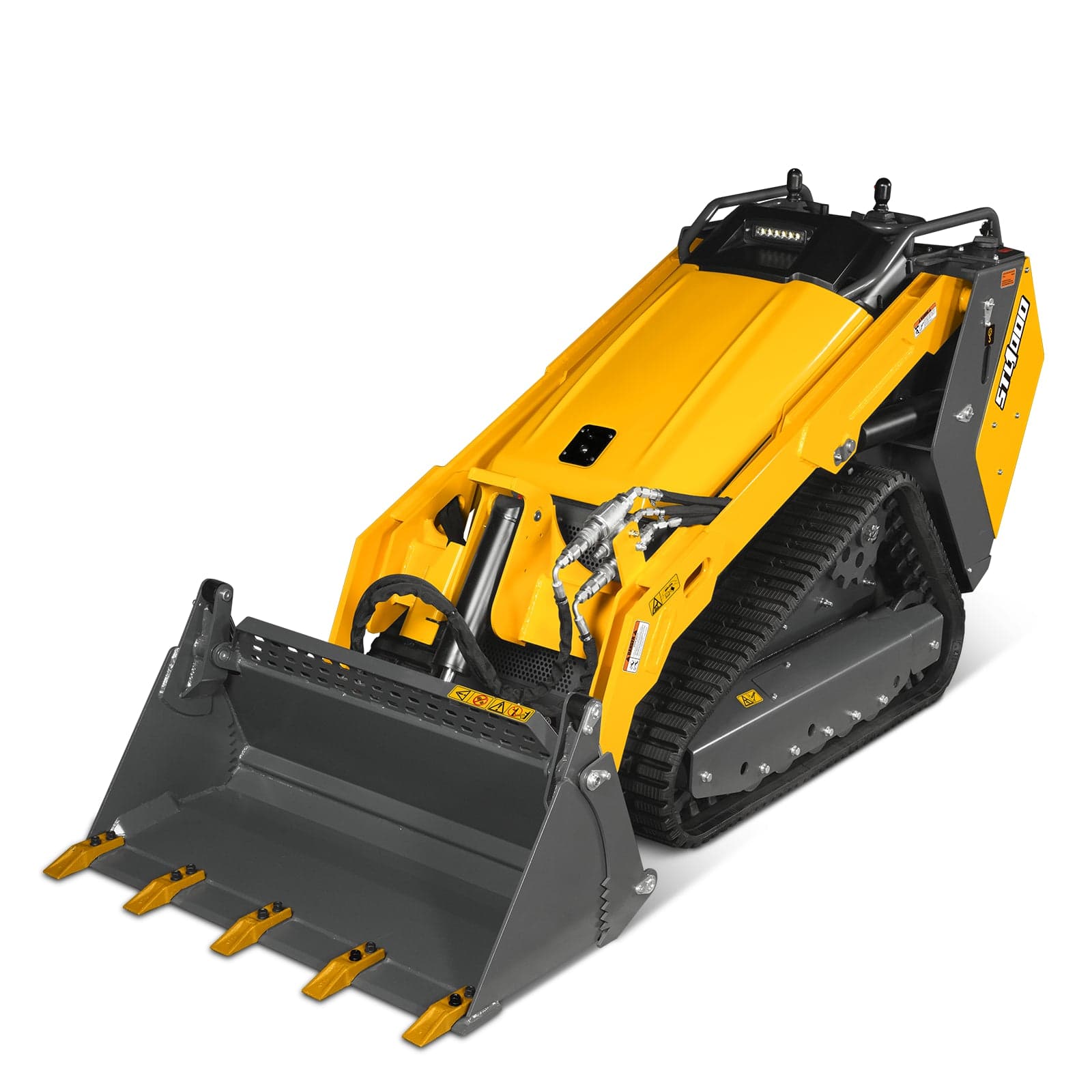
Mini Skid Steer Stand On Compact Track Loader ( 4 in 1 bucket included ) with 25HP KUBOTA D1105 Diesel Engine, Common Industry Interface (CII),...
£17,141.25ex VAT
Request a quote for volume pricing
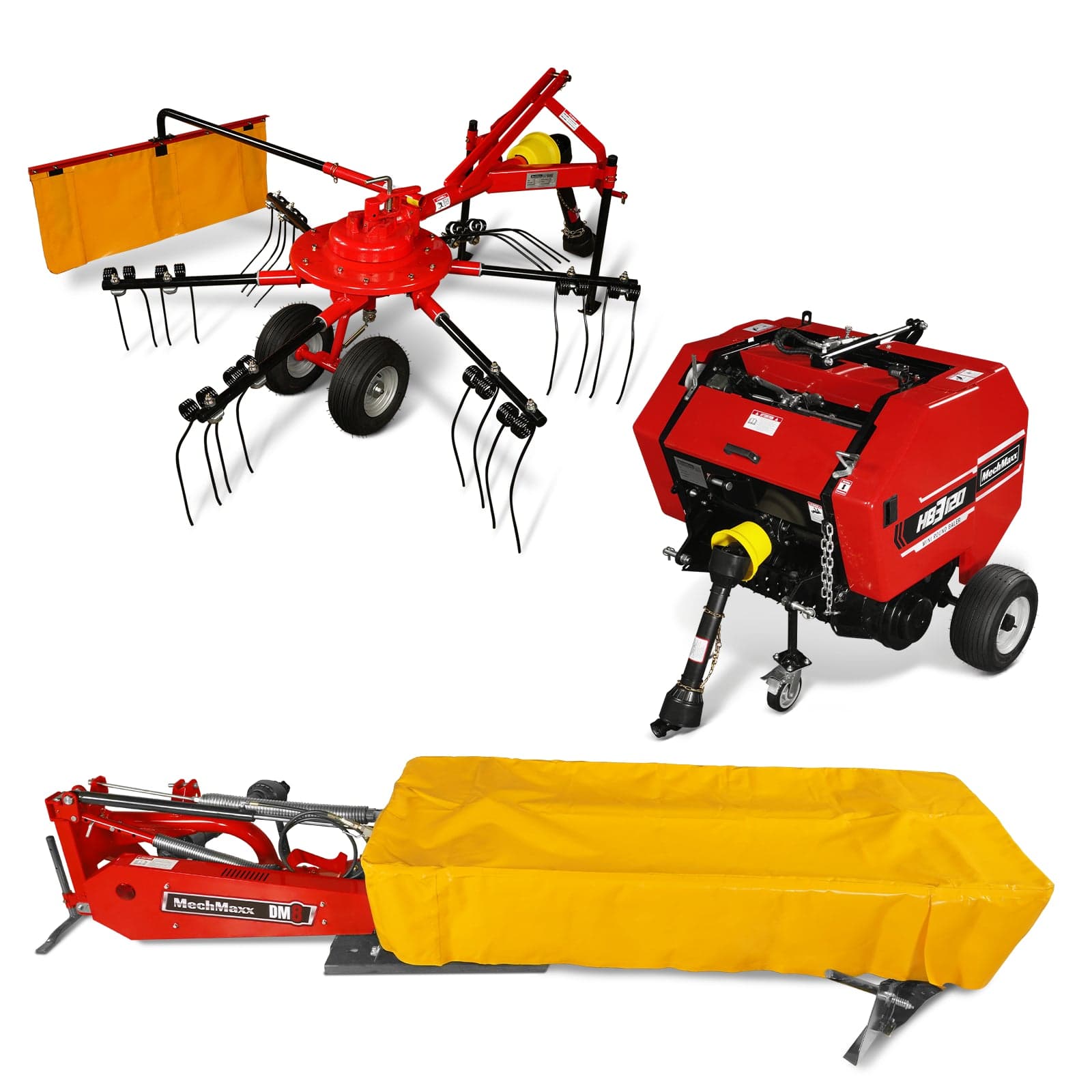
Hay Equipment Combo
Hay Baler & Hay Rake Tedder & Disc Mower Combo, HB3120, HT100, DM8
£8,048.54ex VAT
Request a quote for volume pricing
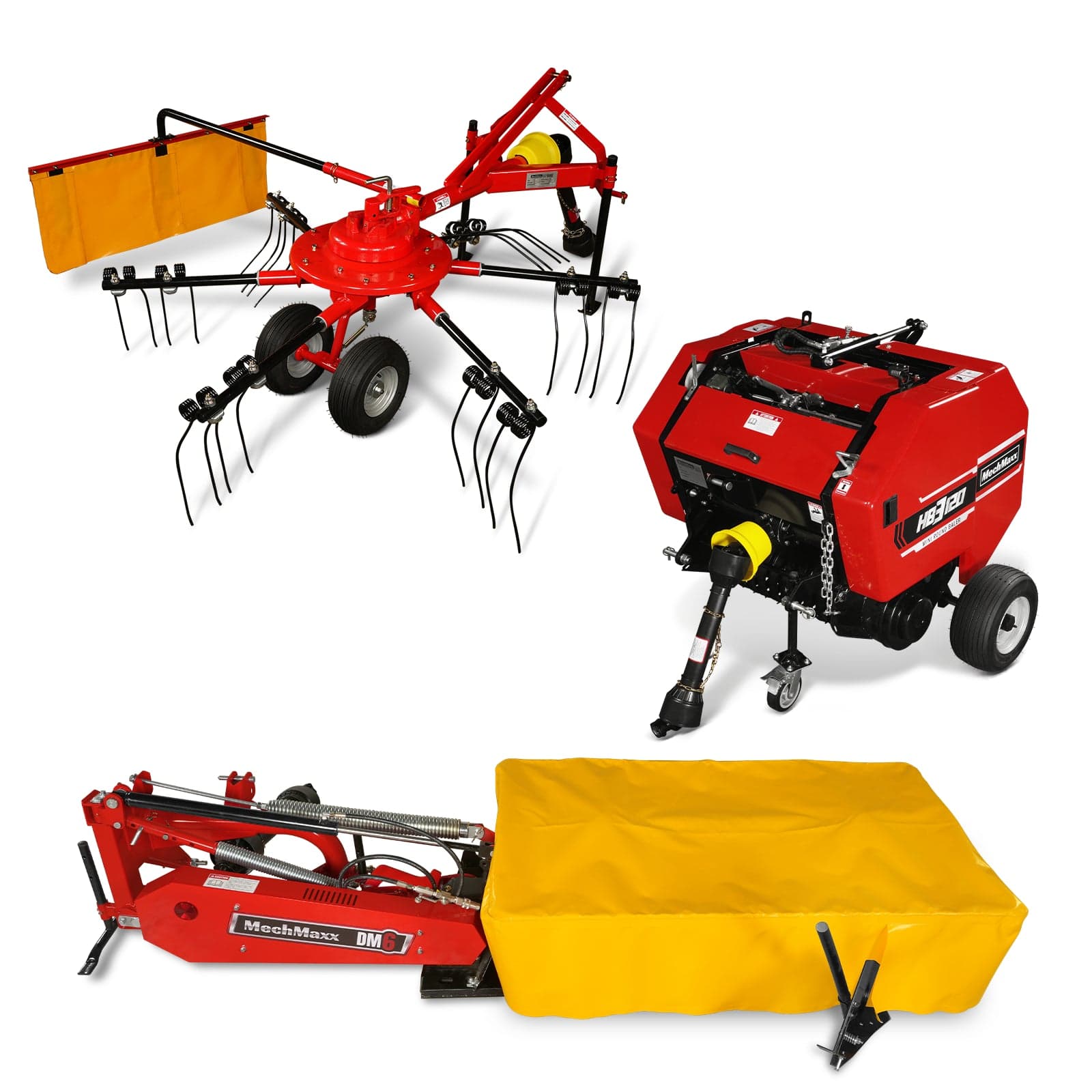
Hay Equipment Combo
Hay Baler & Hay Rake Tedder & Disc Mower Combo, HB3120, HT100, DM6
£7,525.54ex VAT
Request a quote for volume pricing
Further reading
External guidance from the Health and Safety Executive and GOV.UK. We summarise it here for convenience; where it matters, work from the source.