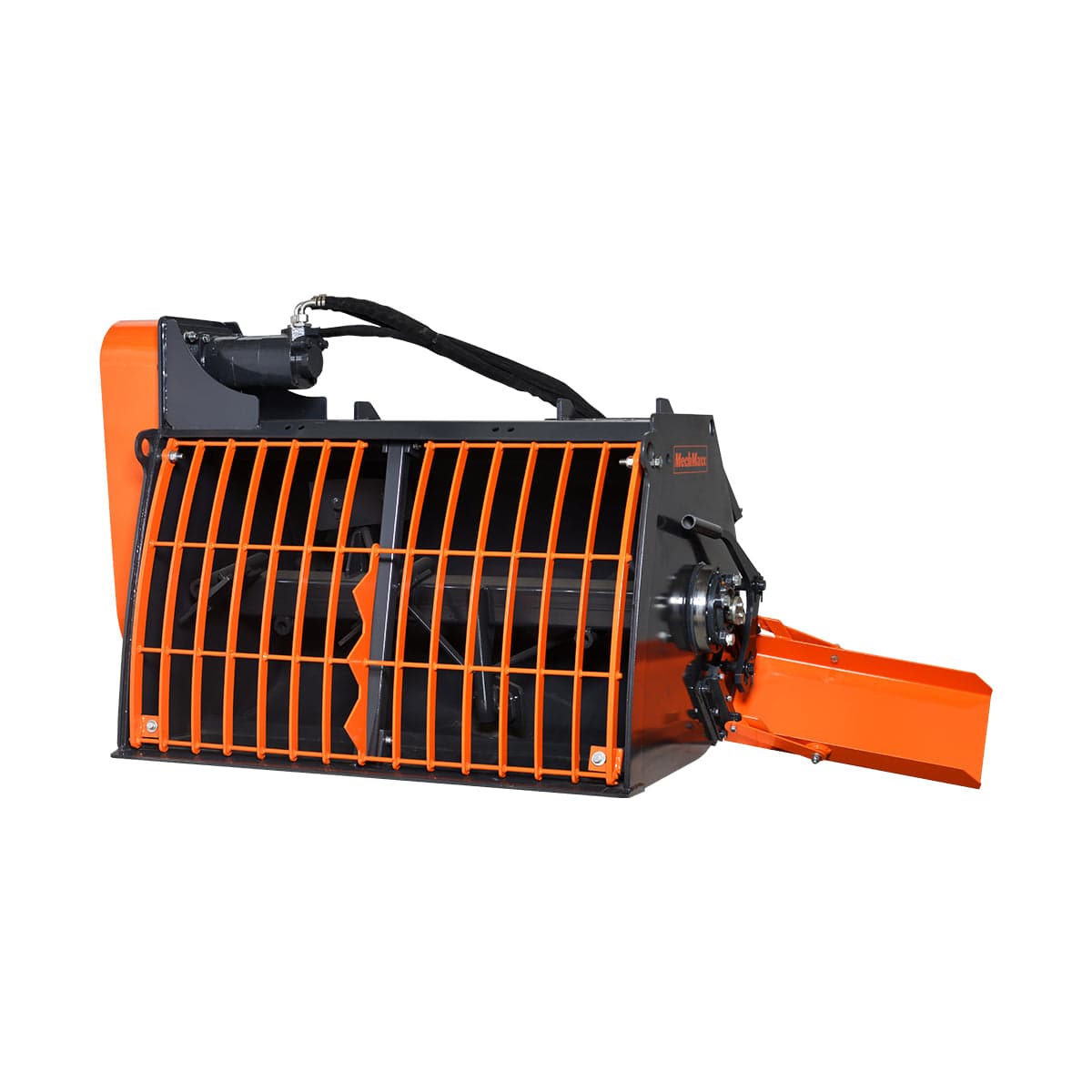
An attachment that does not match your machine's hydraulics will either refuse to work or work badly and wear fast. It is the most common reason attachment purchases disappoint, and it is entirely avoidable by checking three numbers before you order.
Hydraulic flow is the number that matters
Hydraulically driven attachments — mulchers, brush cutters, trenchers, augers, brooms — are specified with a flow range in gallons per minute. Your machine has an auxiliary hydraulic flow rating. These have to overlap.
Too little flow and the attachment runs slowly, stalls under load and generates heat instead of work. Too much flow and you risk over-speeding the motor and damaging it. Neither is covered by goodwill.
Mini skid steers vary widely, from around 7 gal/min on smaller stand-on machines to 20 gal/min or more on larger units. A mulcher wanting 11–16 gal/min simply will not perform on a 8 gal/min machine, however well it bolts on.
Working pressure
Alongside flow, check working pressure, quoted in psi. Attachments typically specify a range — 2000–3000 psi is common. Your machine's auxiliary circuit pressure needs to sit inside it.
Flow determines speed; pressure determines force. An attachment with adequate flow but insufficient pressure will spin freely and stall the moment it meets resistance.
Mounting plates and standards
Full-size skid steers largely use a universal quick-attach plate, which is why most attachments describe themselves as universal mount. Mini skid steers and stand-on loaders are less standardised, and plate patterns differ between manufacturers.
Check the plate before ordering. An adapter may exist, but it adds length ahead of the machine, which shifts the load further from the pivot and reduces effective lift capacity.
Weight and stability
Attachment weight matters twice: the machine has to lift it, and it has to stay stable while doing so. Rated operating capacity assumes a load close to the coupler, and a heavy attachment extended forward reduces that capacity significantly.
Grapples and augers in particular move the centre of gravity forward. On a small machine, an attachment within the lift rating can still make the machine unstable on a slope.
Choosing between similar tools
A rotary brush cutter and a drum mulcher look interchangeable and are not. The brush cutter clears grass and light scrub quickly across open ground. The drum mulcher cuts heavier standing material — typically up to around four inches — and mulches it finely, more slowly and with much greater hydraulic demand.
A box broom pushes debris; a pick-up broom collects it into a hopper. For yards and car parks the collecting version saves a second operation, which usually justifies the cost difference.
If two attachments seem to overlap, the question is almost always throughput versus capability. Decide which you need before comparing prices.
Common questions
- How do I find my machine's hydraulic flow rate?
- It is in the operator's manual or on the machine's specification plate, listed as auxiliary hydraulic flow in gal/min or l/min. If you cannot find it, tell us the make and model and we will look it up.
- What happens if I run an attachment below its flow range?
- It runs slowly, stalls under load and generates heat rather than work. Prolonged running in that state can damage the hydraulic motor, and it is not usually treated as a warranty matter.
Examples from our skid steer attachments range
A sample of what we list — the full range is larger, and we will confirm the specification with you before you order.
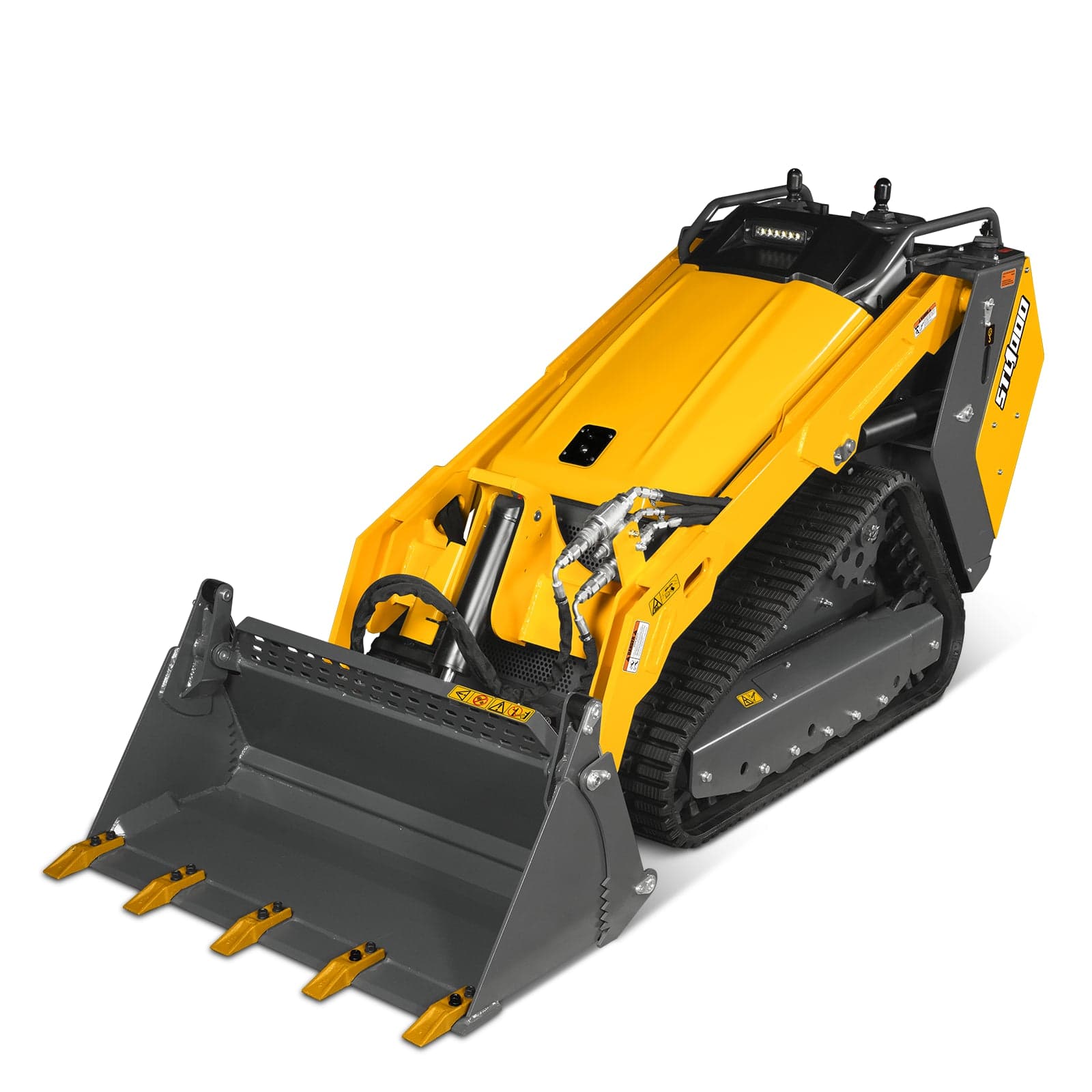
Concrete Mixer
Mini Skid Steer Stand On Compact Track Loader ( 4 in 1 bucket included ) with 25HP KUBOTA D1105 Diesel Engine, Common Industry Interface (CII),...
£16,435.04ex VAT
Request a quote for volume pricing
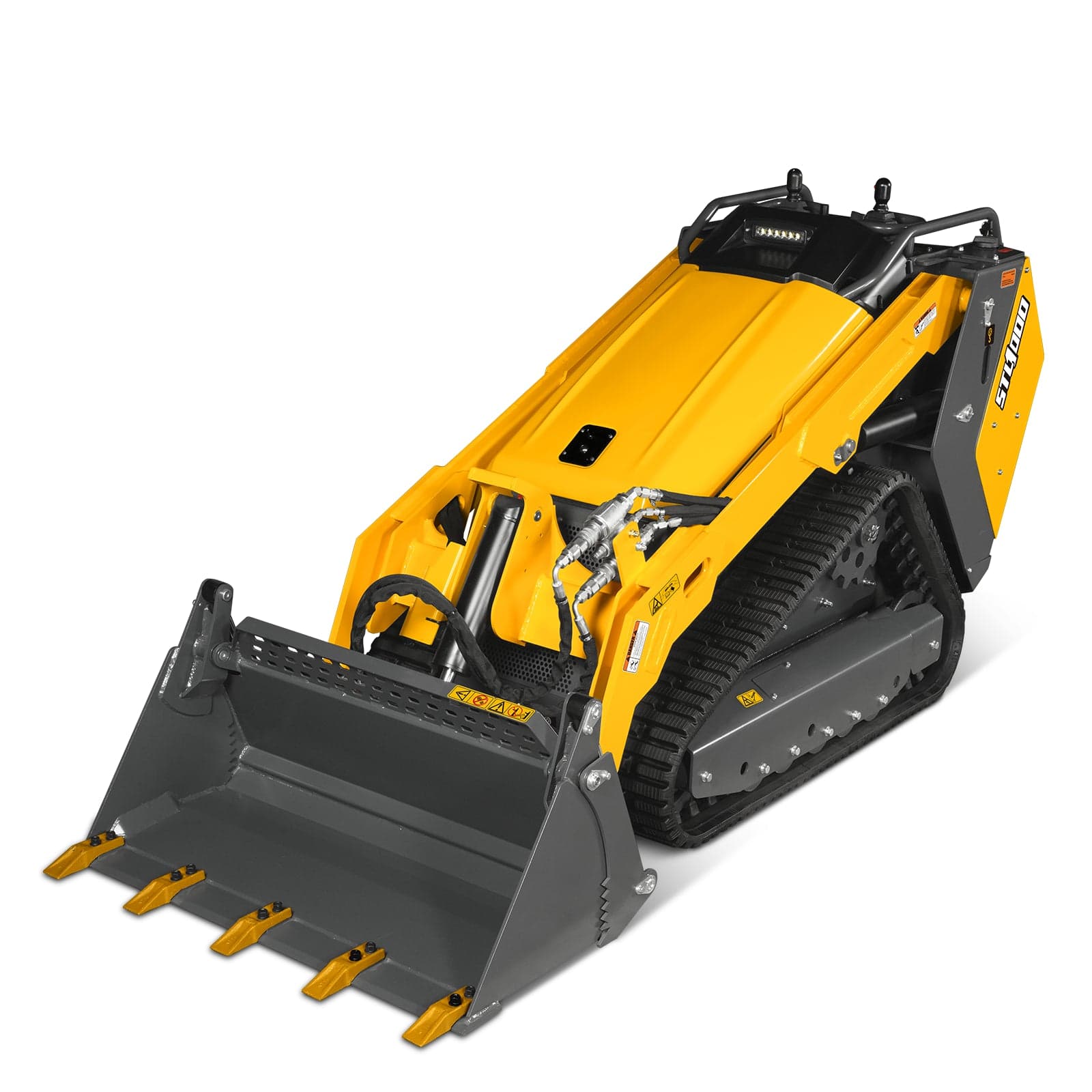
Broom Sweeper
Mini Skid Steer Stand On Compact Track Loader ( 4 in 1 bucket included ) with 25HP KUBOTA D1105 Diesel Engine, Common Industry Interface (CII),...
£16,408.57ex VAT
Request a quote for volume pricing
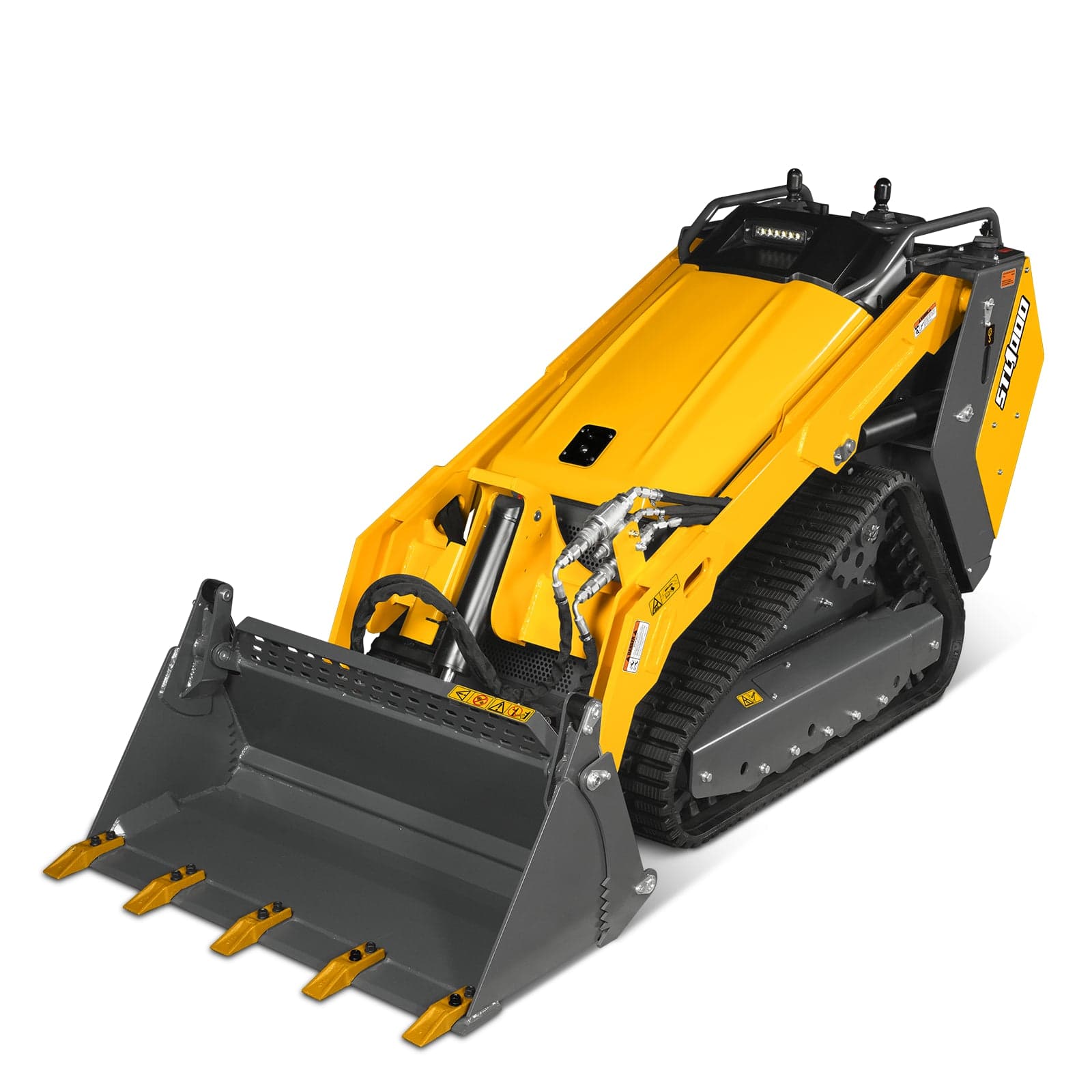
Clamp-On Bale Spear
Mini Skid Steer Stand On Compact Track Loader ( 4 in 1 bucket included ) with 25HP KUBOTA D1105 Diesel Engine, Common Industry Interface (CII),...
£16,395.94ex VAT
Request a quote for volume pricing